
Zero-effort install
Quick contactless install — no tools, no Wi-Fi needed. One device per property.
One cellular device per property. Placed next to the thermostat or in a problem area — pull the tab, stick to the wall, done in seconds. Our proprietary damp & mould-risk algorithm scores every home continuously. No hub, no gateway, no Wi-Fi.
Zero-effort install
Quick contactless install — no tools, no Wi-Fi needed. One device per property.
Privacy-first by design
No cameras, no microphones, no personal data collection. Environmental readings only — temperature and relative humidity. GDPR compliant out of the box.
Significant cost savings
Reduce monitoring and remediation costs. Surveyors visit the homes that need them — not the ones that don’t.
Resident safety, documented
Keeps residents safe in line with HHSRS standards and Awaab’s Law. Every reading writes the evidence record. The case file is ready before the complaint arrives.
Awaab’s Law ready
Comply with the Social Housing (Regulation) Act 2023. The evidence record writes itself, daily. When the regulator asks, the PDF is already waiting.
Tailored resident guidance
Bespoke emails sent directly to residents with practical tips on keeping their homes healthy — triggered by the data, before issues escalate to complaints.
Peel the tab, stick the sensor to the wall, walk out. COSIE homes is purely cellular (NB-IoT / LTE-M) — no hub, no gateway, no Wi-Fi, nothing to configure. Your compliance lead has a continuous evidence record before Friday.
Quick contactless install. Peel the tab, stick to the wall. One device per property. No hub, no gateway, no Wi-Fi required.
Near-continuous environmental monitoring. Readings are uploaded regularly over the cellular network. No Wi-Fi. No manual intervention. No gaps.
Our proprietary damp & mould-risk algorithm scores each property continuously — attributing risk across three root causes: Excess Moisture, Under Heated, and Under Ventilated. No guesswork.
When a case closes, the evidence record is already written — daily readings, risk scores, and root-cause attribution. Audit-ready when the regulator asks.
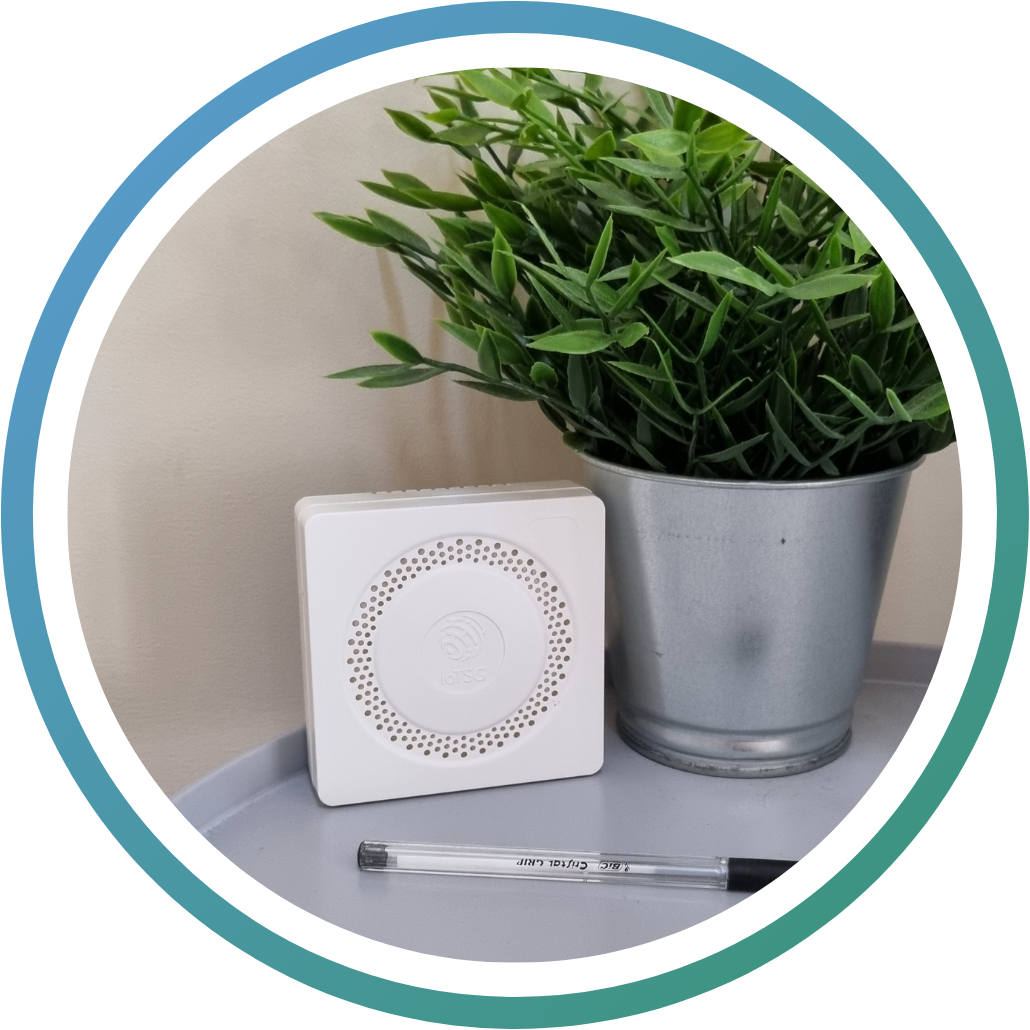
The COSIE homes sensor is a single cellular device per property. No hub. No gateway. No Wi-Fi. Just peel the backing, press it next to the thermostat or in the problem area, and walk out. The sensor does the rest over 5G NB-IoT.
Battery runs for 5 years or more. When it runs low, a replacement is shipped automatically — no manual tracking, no procurement headaches.
5-year+
Battery life
NB-IoT
Cellular · no Wi-Fi
<2 min
Installation time
1 device
Per property
Keep residents safe from Damp and Mould, Excess Cold (including potential Fuel Poverty) and Excess Heat whilst dramatically reducing the cost of compliance. Damp and mould can cause life-threatening respiratory issues for residents — and failure to address it adequately can result in severe consequences for housing managers and landlords. Continuous monitoring means problems are caught early — before they become category 1 HHSRS hazards or Awaab’s Law enforcement notices.
Automatically alert your chosen teams — housing officers, surveyors, and Repairs & Maintenance staff — when a property crosses a risk threshold. No training required; the system does the watching and sends the alert when action is needed. Provide continuous monitoring in problem dwellings and verify that problems don’t recur after remediation.
Deliver bespoke resident emails with tailored, practical tips before issues escalate to complaints. Guidance first, inspection second. By the time a surveyor visits, two of the three root causes have already been ruled out by the data.
Link directly into major housing management platforms to streamline workflows for your compliance and housing management teams — no separate data exports, no manual re-entry.
These are the questions we hear most from landlords, compliance leads, and residents. We answer them plainly so your team can act with confidence.
Download the evidence guide →What causes damp and mould in social housing?
+Damp and mould is caused by excess moisture in the air combining with cold surfaces for that moisture to condense on. The three most common contributors are insufficient ventilation, inadequate heating, and cold spots in the building fabric. Resident behaviour plays a smaller part than is often assumed — fabric and heating play the larger role. A continuous monitoring device can distinguish between all three causes, which is something a single annual inspection cannot do.
What does Awaab’s Law require?
+Awaab’s Law, enacted through the Social Housing (Regulation) Act 2023, requires social housing landlords to investigate reports of damp and mould within 24 hours and to begin remediation within a defined timeframe (14 days for prescribed hazards). Crucially, landlords must also demonstrate that they took reasonable steps to prevent the hazard — which is where a continuous evidence record becomes essential. COSIE homes writes that record daily.
Is damp my landlord’s responsibility?
+Yes, in most cases. Housing providers are legally responsible for structural and fabric causes of damp — cold walls, poor insulation, inadequate heating systems, and insufficient ventilation. Under the HHSRS and Awaab’s Law, landlords have a duty to investigate and remedy these hazards promptly. Residents have a responsibility to ventilate and heat the home appropriately, but fabric-caused damp is clearly the landlord’s responsibility to resolve.
How does continuous monitoring change the evidence?
+A single annual inspection gives you a snapshot — one set of readings on one day. Continuous monitoring writes a near-continuous record, uploaded regularly. When a complaint arrives or an enforcement notice lands on your desk, the evidence record already covers the preceding months. Our proprietary algorithm also attributes the cause — Excess Moisture, Under Heated, or Under Ventilated — so the evidence is not just “damp was present” but “here is why, and here is what we did.”
Do sensors collect personal data? Can residents refuse?
+COSIE homes sensors collect environmental readings only — temperature and relative humidity. There are no cameras, no microphones, and no data that identifies individuals. Readings cannot be used to infer whether anyone is home. Because no personal data is collected, the GDPR considerations are straightforward. Most landlords include sensor installation as a standard term in the tenancy agreement for new lets.
Talk to our team about your stock. We’ll walk you through how COSIE works on your properties — and what the evidence looks like when the regulator asks.
No Wi-Fi, no engineer, no disruption to residents
Install
Continuous evidence record begins immediately
Day 1
Risk-ranked dashboard — act on what matters first
Ongoing
Audit-ready evidence when the regulator asks
Always