
The Healthy Homes project recognises the interconnectedness of housing conditions and the health of occupants, particularly in the context of integrated care systems. These systems bring together various stakeholders - including the NHS, local authorities, social housing providers, and public health teams - to address the broader determinants of health. With housing conditions playing a significant role in people's lives, the project seeks to integrate housing fabric management with its impact on residents.
One of the key focuses of the project is to harness technology to enable system integration and drive wider systemic change. By gathering insights from diverse stakeholders, including housing providers, industry experts, research institutions, and technology companies, the project aims to pave the way for a more collaborative and proactive approach to addressing housing challenges.
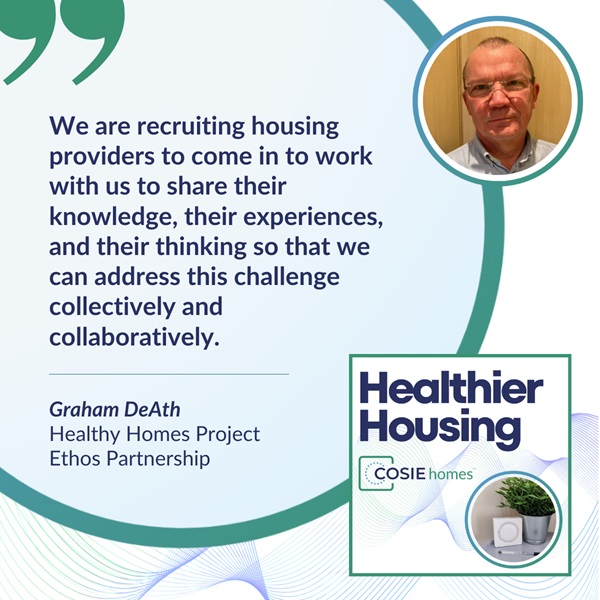
"The potential for positive change is significant, and the Healthy Homes project serves as a testament to the power of collective action in addressing complex societal issues." Graham DeAth · Healthy Homes Project
The potential benefits of the Healthy Homes project extend beyond improved living conditions. By shifting the focus towards prevention rather than restoration, the project seeks to reduce the burden on the NHS and reallocate resources to provide better housing and more preventative healthcare measures.
The project's emphasis on data science and analytics is crucial for understanding housing conditions and driving actionable insights. Real-time data collection and a bottom-up and top-down approach form the foundation for informed decision-making and collective action. The goal is to create a national database of housing data uniquely linked to individuals' health data, thereby enabling more targeted interventions and systemic improvements.
The Healthier Homes DINcubator
Customer and regulatory demands are soaring. Registered Providers are now being asked to safeguard resident health and wellbeing. The sector is being pushed to address the root causes of challenges, not just deal with mere symptoms such as damp and mould. As a result, core operating models in the sector are coming under scrutiny.
Pivotal transitions are underway - from asset to customer-centricity, reaction to prevention, and siloed to integrated solutions. A system-wide approach is increasingly necessary to address these so-called 'wicked challenges'. Housing-only solutions are no longer viable. Operating models must embrace the 'health of homes' in both physical and human terms.
The DINcubator extends the successful DINlab model from the Property Innovation Network (PIN). Likeminded Registered Providers are coming together with their peers and other stakeholders to take on the Healthy Homes challenge. In this open, collaborative environment, participants can:
- Harness the collective knowledge and insights of peer organisations
- Listen to the voices of both customers and other potential service providers
- Work with research and industry innovators to pioneer practical solutions
The DINcubator is following a structured process, covering four phases - Discover, Define, Develop, Deliver - with the end aim of creating a Blueprint for a future operating model to bridge the housing and health divide.
In conclusion, the Healthy Homes project represents a proactive and collaborative initiative to address the challenges of damp and mould in UK housing. By leveraging technology such as COSIE homes and DORIS care, fostering collaboration, and emphasising the importance of data-driven decision-making, the project aims to create a future where all residents live in warm, dry, and healthy homes.